


Protecting the brothers and sisters of the fire service industry
THE LATEST
Our goal is to partner with top leading suppliers in the industry as we continue to grow further in providing high-quality products.

We Provide the Highest Quality and Most Innovative Products Available
Our mission is to ensure that every firefighter is equipped with the best tools to tackle the toughest challenges. By collaborating with industry-leading brands, we bring you the latest in firefighting technology and equipment, designed to enhance safety, efficiency, and performance in the line of duty.
Quality Assurance
We ensure products meet the highest standards of safety and performance with rigorous testing.
Innovative Solutions
We are committed to bringing you the latest advancements in firefighting equipment.
Dedicated Support
Our team is here to support you with expert advice and exceptional customer service.
From Our Blog
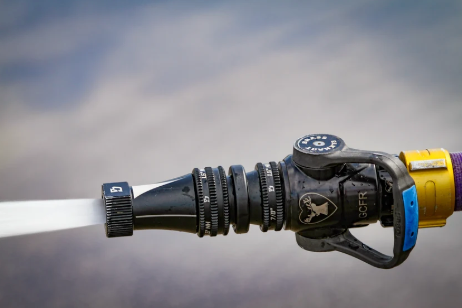
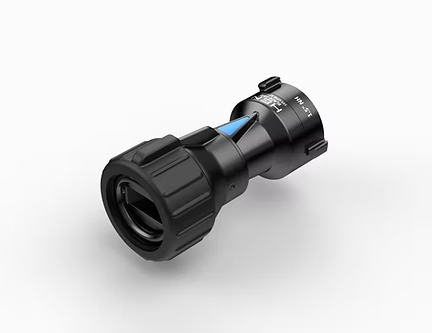
Simple, rugged smooth bore tips engineered to put water exactly where it needs to go, now available to Canadian fire departments through Tech Forward. At Tech Forward Fire Solutions, our goal has always been to partner with the leading innovators in the fire service and bring their best equipment to the crews who rely on it. That is why we are proud to welcome Delta Brass to our vendor lineup. Delta Brass builds structural nozzles around a straightforward idea: give firefighters better stream performance without adding complexity to the attack package. Their D-160 and D-265 Nozzle Tips, along with the companion S-160, do exactly that. What Makes the Delta Line Different Every Delta tip starts with the stream. Using Computational Fluid Dynamics, Delta Brass engineered a patent pending waterway with a conical entry, a reverse taper and a rectangular exit orifice. The result is a narrow, smooth bore FLAT stream that increases the surface area of the water while still discharging LARGE droplets. Those heavy droplets hold their reach and penetration, while the flat profile delivers wider coverage than a traditional round stream, making it an ideal application for compartmentalized firefighting. The construction is just as focused. Each tip is precision machined on a 5 axis CNC from a single block of 6061 aluminum. Once attached, there are no moving parts, no adjustments and no settings to manage. In the fire environment, the only action required is opening or closing the bale. D-160 Nozzle Tip: Built for the Interior Residential Attack The D-160 is a robust, maintenance free two piece tip designed to stack onto an integrated 7/8" smooth bore shut-off. It can also be run on a full shut-off on top of a 7/8" threaded tip such as the S-160, and it is recommended for true internal diameter 1.75" low pressure attack line. What sets it apart is the width of its stream. The D-160 produces a narrow FLAT stream roughly as wide as a typical hallway or doorway, which makes it highly effective at sealing off compartments during an interior residential fire attack. The stream is also compact enough to be directed through windows and doorways from a distance without wasting water, so more of what you flow actually reaches the target. Designed for 160 GPM at a 50 PSI tip pressure with 60 lbs of nozzle reaction, the D-160 is an affordable upgrade that fits into the setup your department already runs. D-185 Nozzle Tip: A Step Up in Flow For crews who want more water from the same interior attack approach, the D-185 builds on the D-160 with the same maintenance free two piece design. It stacks onto an integrated 15/16" smooth bore shut-off, or runs on a full shut-off on top of a 15/16" threaded tip such as the S-185. It delivers the same hallway width FLAT stream for sealing off compartments, flowing 185 GPM at a 50 PSI tip pressure with less than 70 lbs of nozzle reaction. The D-185 is available on request through Tech Forward. D-265 Nozzle Tip: Big Water Without the Complexity When the fire calls for a bigger line, the D-265 brings the same rugged, no maintenance two piece design to 2.25" and 2.5" low pressure attack line. It stacks onto an integrated 1 1/8" smooth bore shut-off, can be paired with a 1 3/8" shut-off, or can sit on top of a full waterway shut-off fitted with a 1 1/8" tip with exposed threads. Flowing a hard hitting 265 GPM at 50 PSI with 99 lbs of nozzle reaction, the D-265 pairs the reverse tapered waterway and rectangular exit with long reach and heavy droplets that cut through distance and turbulence. It is well suited to an initial big hit on a well involved fire, to advancing into a commercial structure where reach, coverage and higher flows all matter, and to supporting a defensive operation from a safer position. For departments that need big water on a practical, straightforward platform, the D-265 delivers. S-160: The D-160's Perfect Partner The S-160 is a traditionally designed 7/8" smooth bore tip with exposed threads, made to get the most out of the D-160 when paired with a full 1 1/2" or 1 3/8" shut-off. Its tapered design reduces turbulence for a smoother, more effective stream. Because the D-160 simply stacks on top, crews can quickly remove it and run the S-160 on its own whenever reach matters more than coverage, giving you two stream options from one setup. Choosing Your Setup Running a 7/8" integrated smooth bore? The D-160 stacks right on. Running a full shut-off? Pair the D-160 with the S-160 for a FLAT stream when you need coverage and a straight smooth bore when you need reach. Want more flow on your attack line? The D-185 moves up to 185 GPM on a 15/16" setup. Moving to a bigger line? The D-265 brings 265 GPM to your 2.25" and 2.5" lines on a 1 1/8" setup. The D-160, D-265 and S-160 are available in 1.5" NH or 1.5" NPSH threads, and the D-185, S-185 and S-265 are available on request. Specifications at a Glance
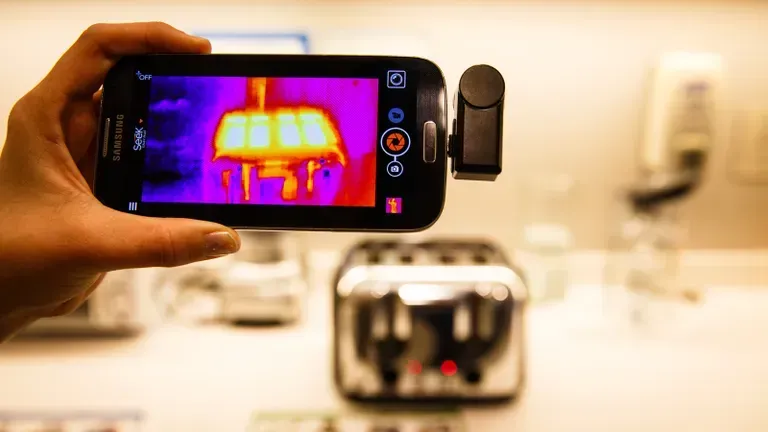
Not that long ago, firefighting relied almost entirely on instinct, training, and teamwork, and while those fundamentals haven’t changed, the tools certainly have. Over the years, thermal imaging cameras (TICs) have evolved from bulky, specialty equipment into something that’s now becoming standard on fire trucks across the country. Seek Thermal has been fortunate to see that evolution up close, and to play a role in making high-quality, affordable thermal cameras available to more firefighters than ever before. From Heavy Gear to Everyday Tools When thermal imaging first entered the fire service, the cameras were large, heavy, and expensive. Only a few departments could afford them, and often only officers or chief vehicles carried them. The concept was revolutionary, seeing heat through smoke and darkness, but the technology was limited by its size and cost. Fast forward a couple of decades, and the picture looks very different. Cameras are now smaller, lighter, and far more affordable. In many departments, firefighters are carrying TICs the size of a cell phone. That shift alone has transformed how firefighters work. Thermal imaging isn’t just a specialty tool anymore; it’s part of the standard gear lineup, as essential as an SCBA or a radio. Smarter, Faster, and More Affordable Technology Today’s thermal imaging cameras don’t just show heat. They deliver clearer, faster, and more stable images than ever before. Advancements in sensor design and software processing have made cameras more responsive, meaning firefighters see real-time detail without lag or image “whiteout” when moving between hot and cool areas. At the same time, manufacturing innovations have made these improvements more cost- effective. What once cost tens of thousands of dollars can now fit within a department’s annual equipment budget, allowing even smaller and volunteer departments to equip their crews. Seek Thermal has focused on developing cameras that deliver professional-grade clarity and durability while keeping the price within reach. Because when every firefighter has access to thermal vision, not just the officer holding the single camera, the entire crew benefits. The more people who can “see” what’s happening through smoke and heat, the safer and faster the response becomes. The Rise of Situational Awareness Cameras One of the biggest steps forward in recent years has been the rise of situational awareness cameras. Smaller, simpler TICs designed for quick assessments, exterior operations, and backup visibility. These aren’t just for interior fire attack; they’re for seeing the full picture of the incident scene. Situational awareness cameras have changed how firefighters size up a scene, locate hotspots, and monitor fire behavior in real time. They’ve also become a key safety tool, helping firefighters regain orientation when visibility drops to zero and reducing mayday incidents related to disorientation. Cameras like Seek’s FirePRO Series were built with this exact purpose in mind. To support firefighters inside and outside the structure by providing clear, reliable imaging in a compact, rugged design. Whether it’s being used during overhaul, exterior size-up, or search operations, a situational awareness camera gives crews the visibility they need to make smart, informed decisions. Supporting the Future of Firefighting Thermal imaging cameras have come a long way. From heavy, single-use tools to compact, affordable, and essential firefighting equipment. They’ve improved not only how fires are fought but also how firefighters stay safe doing it. Seek Thermal is proud to support that progress. Every camera designed, from situational awareness cameras like the FirePRO Series to tactical, interior-focused options like the AttackPRO Series, is built around one goal: helping firefighters see more, decide faster, and come home safely. Because technology should never replace experience, it should strengthen it. And that’s exactly what modern thermal imaging does on the fireground every single day. For more information on Seek Thermal’s line up of thermal imaging cameras for the fire service, visit their website here: https://www.thermal.com/firefighting.html
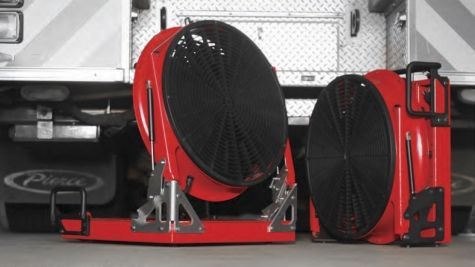
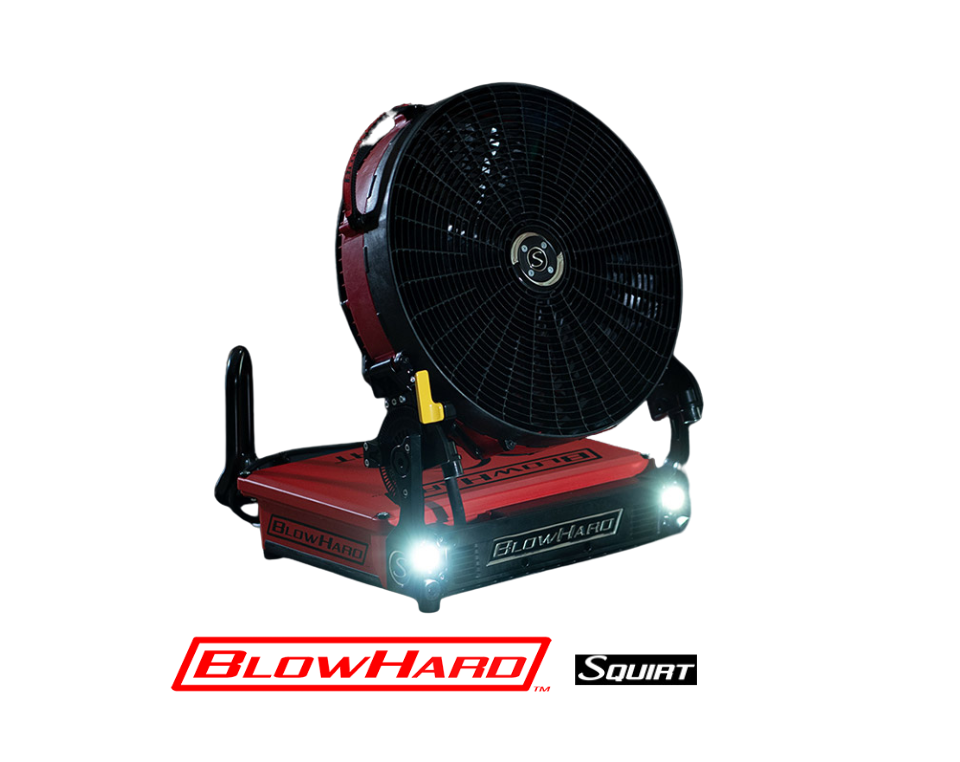
Why Fan Size and Performance Matters